|
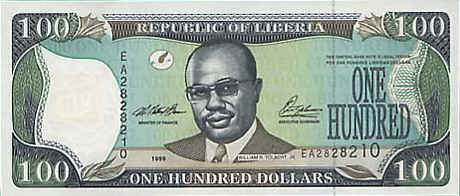
President
William R. Tolbert, Jr. |
||
|
|
||
|
|
William Richard
Tolbert, Jr. was born in Bensonville, Montserrado County, on May 13,
1913. His grandfather originated from Charleston, South Carolina, U.S.A.
and he and his family had arrived in Liberia in 1879. One of his four
children, William R. Tolbert, Sr., had more than 20 children. Partly for
this reason, the Tolbert-family was one of the largest Americo-Liberian
families. William R. Tolbert,
Jr., an ordained Baptist pastor and former President of the Baptist
World Alliance, was President Tubman’s modest (‘invisible’)
Vice-President for nearly 20 years. He succeeded President
Tubman (1944-1971) on July 23, 1971 after he had died in a London
clinic. Two months earlier, the two men had been re-elected. Tolbert not
only served Tubman’s truncated term of office but, after a minor legal
adjustment, continued to be President during the following four years. Tolbert’s succeeded
Tubman in accordance with constitutional provisions and although the
succession was peaceful, it was not as smooth as it is usually reported.
William Tolbert had
quietly served President Tubman during five of his six terms of office
and was at best considered a possible interim president. When the
President had left for England he had left the reins of government in
the hands of a confident, Secretary of State Rudolph Grimes. When on
July 23 Grimes received the telegram announcing the demise of Tubman, he
tried to become installed as Acting President arguing that Vice
President Tolbert, who had left for his Bellefanai farm in Bong County,
about 200 miles from Monrovia, for the weekend, could not be expected to
return to the capital within the constitutional prescribed term of 24
hours. However, opposition to his plans from other Cabinet Members,
notably Postmaster General Mac DeShield, prevented the realization of
Grimes’ ambitions. In the beginning of
the evening of July 23, William Tolbert arrived in Monrovia in a lent
Volkswagen – his own car had broken down – and still wearing his
short-sleeved safari suit, he was sworn in as Liberia’s 20th
President. Since that day, the open-necked cotton suit has become known
as ‘swearing in’ suit and has replaced on most ceremonial occasions
the tuxedos and top hats that his predecessor had liked so much.
President William
Tolbert, Jr., inherited a country with a political life controlled by
less than 3 per cent of the population, the ‘Americo-Liberians’, and
a modern economy in the hands of foreign investors. The tribal majority
was excluded from both areas. William Tolbert, however, surprised many
and showed a dynamism few only, if any, had expected and which soon
earned the 58-year old Baptist preacher the surname ‘Speedy’. As
mentioned, he broke with Tubman’s conservative formalism that was
based on an imitation of the West and in particular the United States. A
second change was in the area of foreign relations and constituted a
rupture with Tubman’s anti-communist doctrine. Thirdly, Tolbert
publicly recognized that the fruits of foreign investments were quite
unevenly divided and he gradually introduced re-negotiations of the
concession agreements that had granted the foreign investors important
tax and other privileges. For this purpose he declared the concept of
‘Humanistic Capitalism’. Last but not least, he announced policies
that aimed to improve the living conditions of the majority of the
people: ‘Total Involvement for Higher Heights’, ‘Rally Time’,
‘From Matt to Mattresses’, all geared towards creating ‘A
Wholesome Functioning Society’ and winning the ‘War against
Ignorance, Disease and Poverty’. However, the
progressive ideas and policies of President William Tolbert, Jr. met
with severe opposition within the country’s (only) political party,
the True Whig Party, that had reigned since 1870, with only a short
interruption after President Roye’s deposition in
1871.
Moreover, Tolbert
could not escape from the rivalry among Liberia’s leading families.
The Tolbert-family being one of the largest in the country, he soon
appointed relatives in important public positions. In the mid-1970s
several Cabinet members belonged to the Tolbert-clan among whom the
Minister of Finance, his brother. Another brother was President
Pro-Tempore of the Senate, the Major of Monrovia was a cousin etc. Thus, his slogans
after some years proved to be bloated rhetoric. In retrospect, his
Administration that had started so promising was characterized by
nepotism, corruption and the continuation of privileges (for a few) and
poverty (for the masses).
In October 1975
William Tolbert Jr. was elected President in elections in which he was
the only candidate. In January 1976 he began another term of office -
which meanwhile had been changed from four to eight years. However, he
did not finish the eight-year period. On April 12, 1980 he was
assassinated in the bloody coup d’état that brought Liberia’s
first tribal president, master
sergeant
Samuel Doe, to power. Ironically, President
Tolbert who had started as one of Liberia’s most progressive
Presidents became the victim of the conflict that had
characterized relations between the Americo-Liberian colonists and the
Afro-Liberian population since the arrival of the first settlers in
1821. Another irony is that President William Tolbert, Jr., was assassinated in the Presidential Palace, ‘the Executive Mansion’, a place he shunned at night. Tolbert preferred to sleep at his home in (former) Bensonville, renamed Bentol by him, at a distance of 25 miles from Monrovia. Persistent rumors in Liberia tell that Tolbert’s superstition was at the base of his decision to spend the night in Bentol. It was said that evidence of ritual ceremonies had been found in the Mansion after President Tubman’s death and Tolbert was convinced that it would bring him bad luck if he would spend the night in that building. At least history has proved him right in this respect.
|
|
|
Sources: Executive Mansion, ‘Presidential Papers – Documents, Diary and Record of Activities of the Chief Executive’, First Year of the Administration of President William R. Tolbert, Jr., July 23, 1971 – July 31, 1972 (Monrovia, n.y.). Executive Mansion, ‘Presidential Papers – Documents, Diary and Record of Activities of the Chief Executive’, Second and Third Years of the Administration of President William R. Tolbert, Jr., August 1, 1972-July 31, 1973 and August 1, 1973-July 31, 1974; (Monrovia, 1975). Executive Mansion, ‘Presidential Papers – Documents, Diary and Record of Activities of the Chief Executive’, Concluding Period of the First Administration of President William R. Tolbert, Jr., August 1, 1974-December 31, 1975 (Monrovia, 1976). Guannu, Joseph Saye, ‘Liberian History Since 1857’ (Monrovia, 1980). Guannu, Joseph Saye (ed.) Inaugural Addresses of the Presidents of Liberia – From Joseph Jenkins Roberts to William Richard Tolbert, Jr, 1848 to 1976’ (New York, 1980). Liebenow, J.Gus, ‘Liberia – The Quest for Democracy’ (Indianapolis, 1987). Ministry of Information, Cultural Affairs and Tourism, ‘Rally Time’ (Monrovia, n.y.). Ministry of Information, Cultural Affairs and Tourism, ‘My Challenge is Mankind’, speeches by President William R. Tolbert, Jr. (Monrovia, 1974).
Ministry
of Information, Cultural Affairs and Tourism, ‘I believe’,
Excerpt from the Acceptance Speech by Dr. William R. Tolbert on
Being Officially Informed of his Overwhelming Election as President
of the Republic of Liberia For an Eight-Year Term (Monrovia, 1975).
Ministry
of Information, Cultural Affairs and Tourism, ‘Statement by Dr.
W.R.Tolbert, Jr., President of Liberia, at a special cabinet meeting
held on February 26, 1976 Declaring War on Ignorance, Poverty and
Disease’ (Monrovia, 1976).
Ministry
of Information, Cultural Affairs and Tourism, ‘Liberia’s Quiet
Revolution’ (Monrovia, 1976).
Ministry
of Information, Cultural Affairs and Tourism, ‘Annual Message of
Dr. William R.Tolbert, Jr., President of the Liberia Baptist
Missionary and Educational Convention, Inc., to the Sixty-Fourth
Session of the Convention, held with the First Baptist Church,
Gbarnga, Bong County, April 5-9, 1978 (Monrovia, 1978).
Ministry
of Information, Cultural Affairs and Tourism, “Liberia’s Quiet
Revolution - The Story of Liberia’s War Against Ignorance, Disease
and Poverty, First revised edition (Monrovia, 1979).
Sankawulo,
Wilton, ‘In the Cause of the People – An Interpretation of
President Tolbert’s Philosophy of Humanistic Capitalism’
(Monrovia, 1979). Van Der Kraaij, Fred P.M., ‘The Open Door Policy of Liberia – An Economic History of Modern Liberia’ (Bremen, 1983). |
||
| © fpm van der kraaij | ||